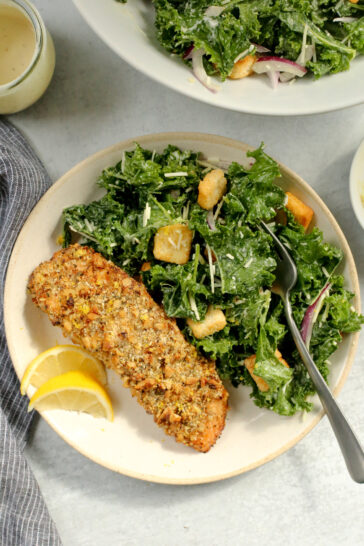
This collection of high fiber recipes will make it easy (and delicious) to add more dietary fiber to your day. Each serving provides 9-10+ grams of fiber to support heart health, gut health, and more!

Whether it’s a satisfying smoothie to start the day, a savory salad to meal prep for lunch, or a hearty dinner to end the day, these recipes deliver a double-digit dose of fiber – or close to it!
Most of us aren’t eating enough fiber, plain and simple. The current recommendation is 25 to 38 grams of fiber per day. But in reality, it’s easier said than done! Most people average about 15-16 grams, leaving a considerable “fiber gap“.
That’s where these easy high fiber recipes come in! A single serving of each will instantly boost your total dietary fiber intake by 9 to 10 grams (or more). That’s an easy way to fill the fiber gap in a single meal.
What’s Included In This Post
Let’s start with the recipes, but keep scrolling to learn more about fiber and why it’s such a big deal!
High Fiber Breakfast Recipes
Start strong by adding these delicious high fiber breakfast options at the beginning of your day.




High Fiber Meal Prep Recipes
Want to save time? Try some of these high fiber lunch recipes or meal-prep friendly options that you can prep in advance.




High Fiber Dinner Recipes
Don’t worry if you missed out on fiber earlier in the day. These high-fiber dinner recipes can help you end the day by meeting your fiber goals in one tasty bowl.


Fiber FAQs
Keep reading to get the facts on fiber, and why it matters so much for overall health and nutrition!
What are the health benefits of dietary fiber?
Put simply, fiber is a helpful part of an overall healthy, balanced diet. When you include high fiber foods on a regular basis, you’ll likely feel more…uh, regular. But beyond the gut health benefits of improved motility and less constipation, here are some other ways fiber can help:
- Better management of blood glucose levels, which can help manage diabetes or your future risk of diabetes.
- Lower trigycerides and cholesterol levels, which may lower your risk for heart disease.
- A lower risk of some types of cancers, including one that’s been on the rise among younger people: colorectal cancer.
- Higher intake of prebiotic starches, which support probiotics from your diet or supplements. This can support a healthy gut microbiome, which in turn supports other major body systems like your immune system.
But here’s my favorite benefit of adding more fiber to your diet: you’ll probably feel fuller, longer! It sucks to eat a tasty meal only to feel hungry or unsatisfied a short while later. Fiber, especially when combined with protein and fat, promotes a feeling of satiety and fullness. Put another way, this aligns with the principles of intuitive eating and a non-diet approach, so it might be one more way to reap even more enjoyment from the meals you’re cooking or eating.
How much fiber should I be eating?
The current fiber recommendation is 14 grams of fiber per 1000 calories eaten. But since many people (myself included!) don’t meticulously count every calorie or macro, aim for range of 25 to 38 grams per day.
Men typically have higher energy needs and thus, should aim for the top end of the range. However, just know that if you’re getting more than that minimum of 25 grams of fiber each day, you’re doing great!
Which foods have lots of fiber?
When you think fiber, think plants! There are two types of dietary fiber (soluble and insoluble) and both are found in plant foods like fruits and vegetables, whole grains (like oats and barley), beans, lentils, legumes, nuts, and seeds.
That’s why you see so many bean-based options on this list of high fiber recipes. Keep your pantry stocked with low-sodium canned options, so you always have this option on hand! They’re easy to toss into other recipes, even if they don’t necessarily include beans on the ingredient list.
What about fiber supplements?
You’ve probably seen supplements like Metamucil or Benefiber, or blends that feature ingredients like inulin, chicory root, psyllium husk, or other blends of different types of fibers. As a registered dietitian, I’ve recommended these options at times, and have even used them myself. It’s hard to meet 100% of your nutrition needs from your diet every single day. So if relying on a supplement makes it more convenient and consistent to get what you need, don’t rule it out!
However, just because I’m a registered dietitian doesn’t mean I’m your dietitian. If you’re considering adding a fiber supplement, this information is meant for general purposes only. Talk to your healthcare team (which hopefully includes a registered dietitian!) who can guide you towards an option that can work well for you. Learn how to find one HERE.
And be sure to save this post! You’ll want to keep checking back as I add more high fiber recipes to this list. Until then, cheers to more fearlessly nourishing meals!