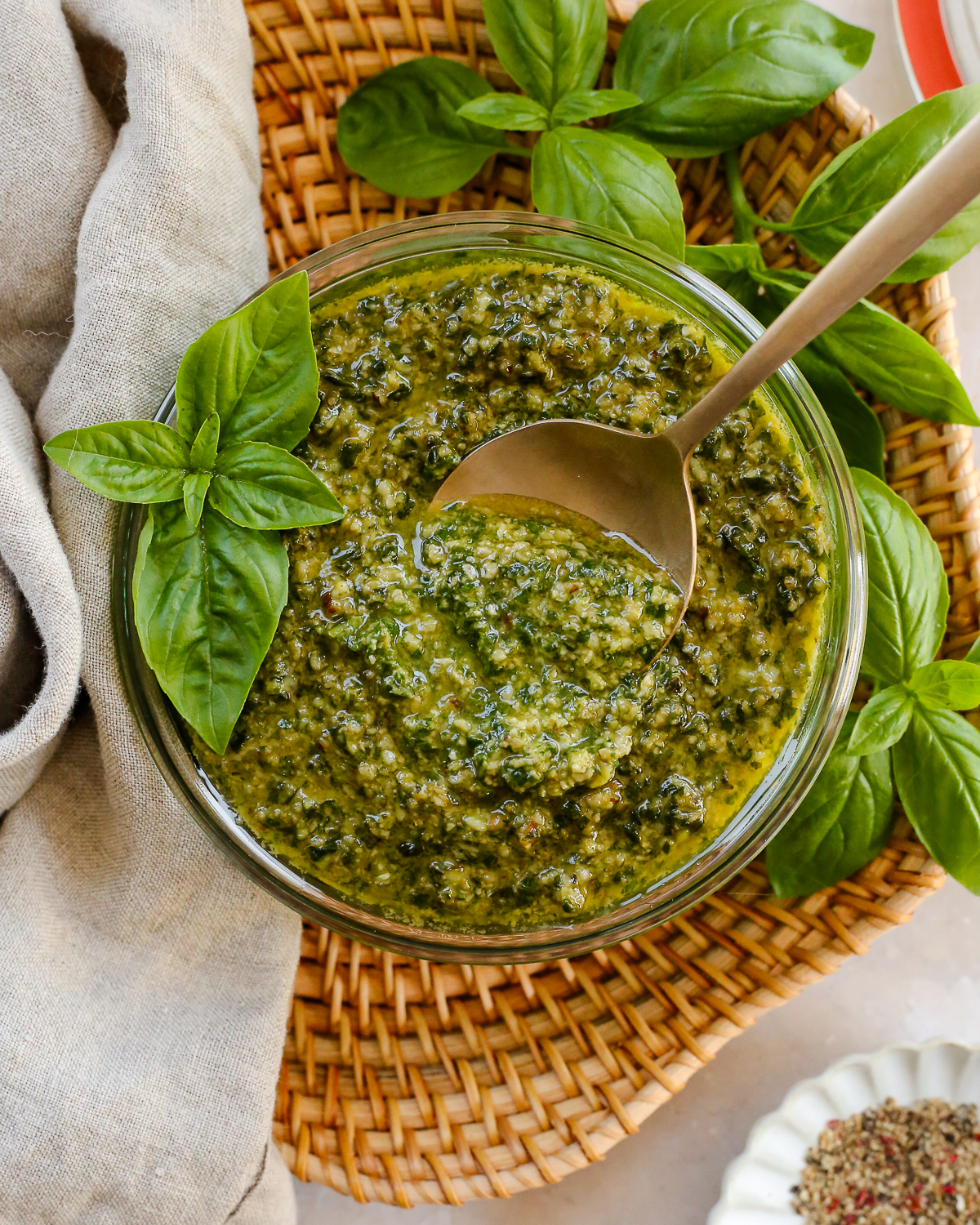
There’s something magical about Homemade Pesto, especially during late summer when fresh basil is everywhere. If you’re lucky enough to have a surplus, save this recipe! You only need five ingredients (and less than 5 minutes) to make a fresh homemade pesto sauce.
What’s Included In This Post
We’re talking about the real deal here: a simple, traditional-style pesto that tastes nothing like what you find in a jar at the store. Because honestly, I’ve tried so many types of store-bought pesto over the years. And they never quite get it right. They might have the right look or a similar texture. But they’re always missing that fresh, vibrant flavor and herbaceous, peppery zip I’m craving. When you make pesto from scratch, you can nail it every time!

Why Make Homemade Pesto?
In addition to the superior flavor and quality, you have complete control over the ingredients. You know exactly what’s going into it, and you can easily adjust the flavor to suit your tastes.
The best part is how ridiculously simple this is. Five ingredients. One food processor. A few minutes of your time. That’s all it takes to have fresh pesto sauce ready to toss with pasta, spread on sandwiches, drizzle over vegetables, or stir into just about anything that needs a flavor boost. And if you make extra batches now while basil is abundant, you can freeze them and pull out a little taste of summer all winter long when fresh herbs are harder to find.
Homemade Pesto Sauce Ingredients
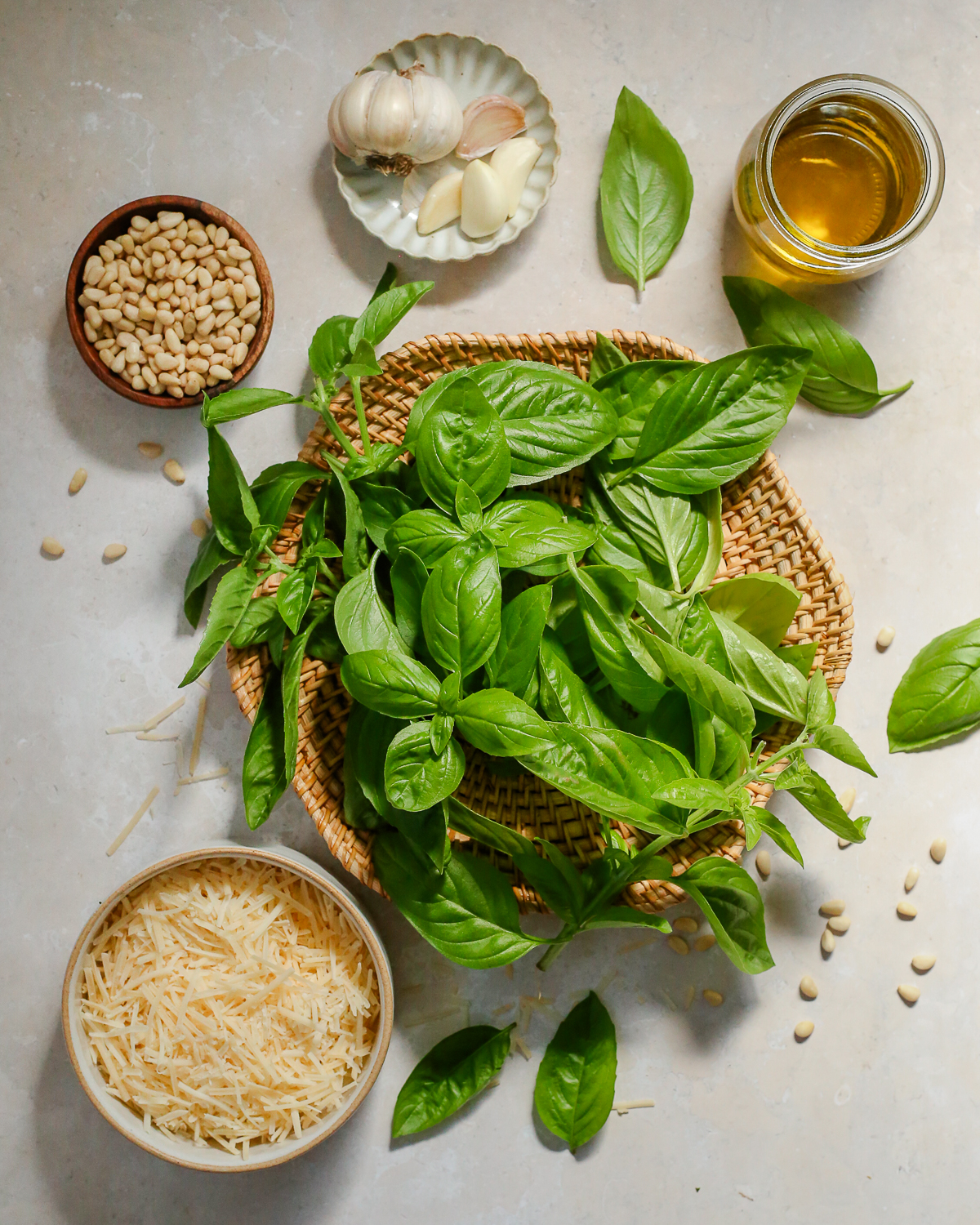
Think of this easy 5-ingredient version as a classic pesto recipe (pesto alla genovese). You only need a few simple ingredients:
- Fresh basil leaves
- Pine nuts
- Parmesan cheese (grated or shredded)
- Garlic
- Olive oil
That’s it! Aside from pantry staples like salt and cracked black pepper, this is all you need to make a good pesto in minutes. Find the full ingredient list and quantities in the recipe card below.
Street Smart Nutrition Tip: If you’re working with a lot of fresh basil, use a salad spinner to quickly and easily wash and dry the herbs. It makes much less of a mess in the kitchen!
A Quick Note About Olive Oil
Most pesto recipes insist on extra virgin olive oil. And while that’s a solid choice, the most important thing is using a high-quality, fresh olive oil that fits your budget. Look for olive oil in an opaque container to protect it from light. This can cause oxidation, which negatively impacts the flavor.
Fresh olive oil should smell and taste grassy and a little peppery. It might even cause a tingle in the back of your throat when you taste it. If it smells musty or tastes flat, that’s a sign your olive oil is past its prime, whether it’s extra virgin or something else.
How to Make Homemade Pesto
This might be the easiest recipe I’ve ever shared. Seriously, you could just chuck everything in a high-powered blender or food processor and be done! Here’s how to make a simple homemade pesto:
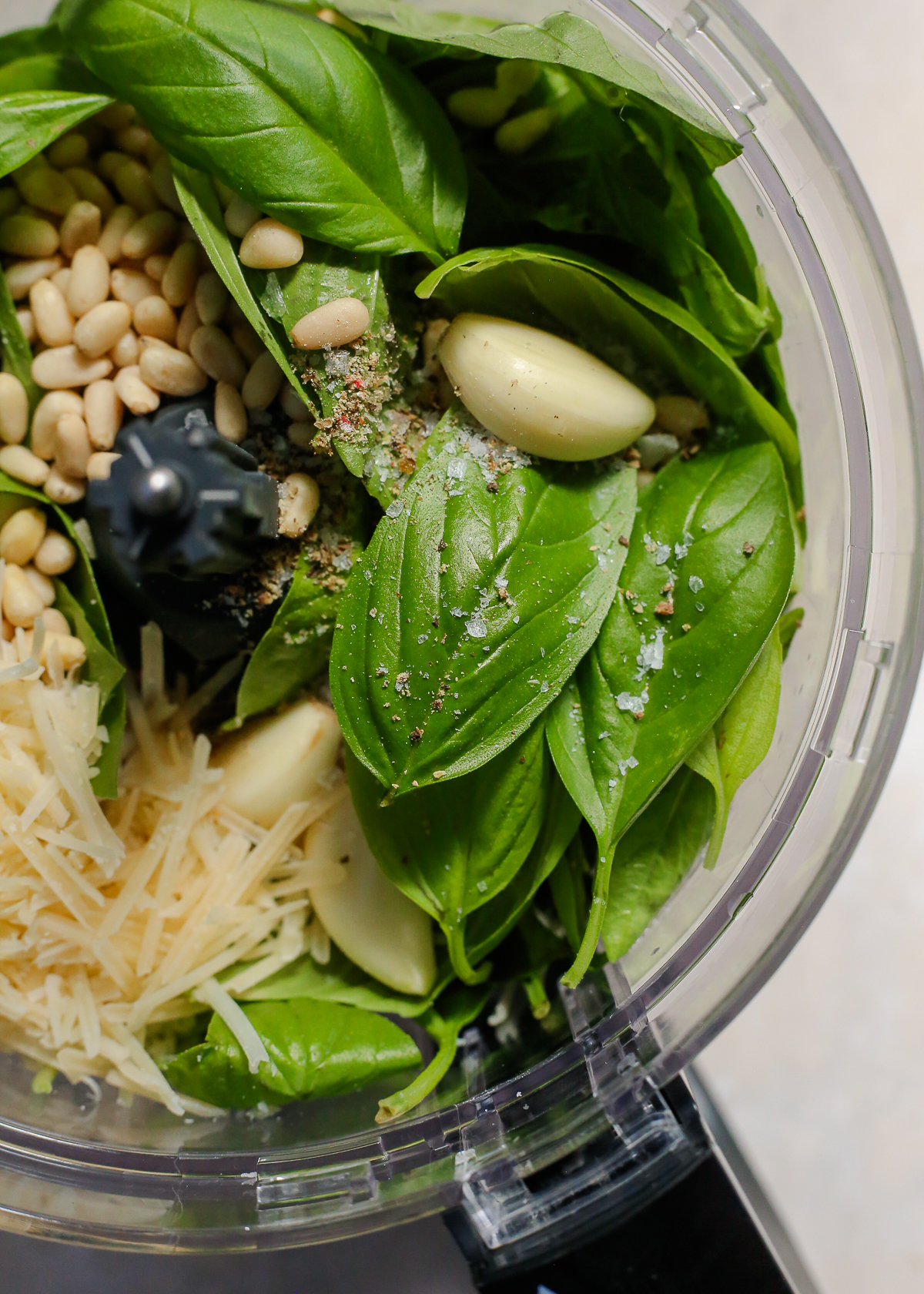
- Add all dry ingredients to the bowl of your food processor: fresh basil, pine nuts, Parmesan cheese, and garlic cloves. Season lightly with salt and pepper (optional).
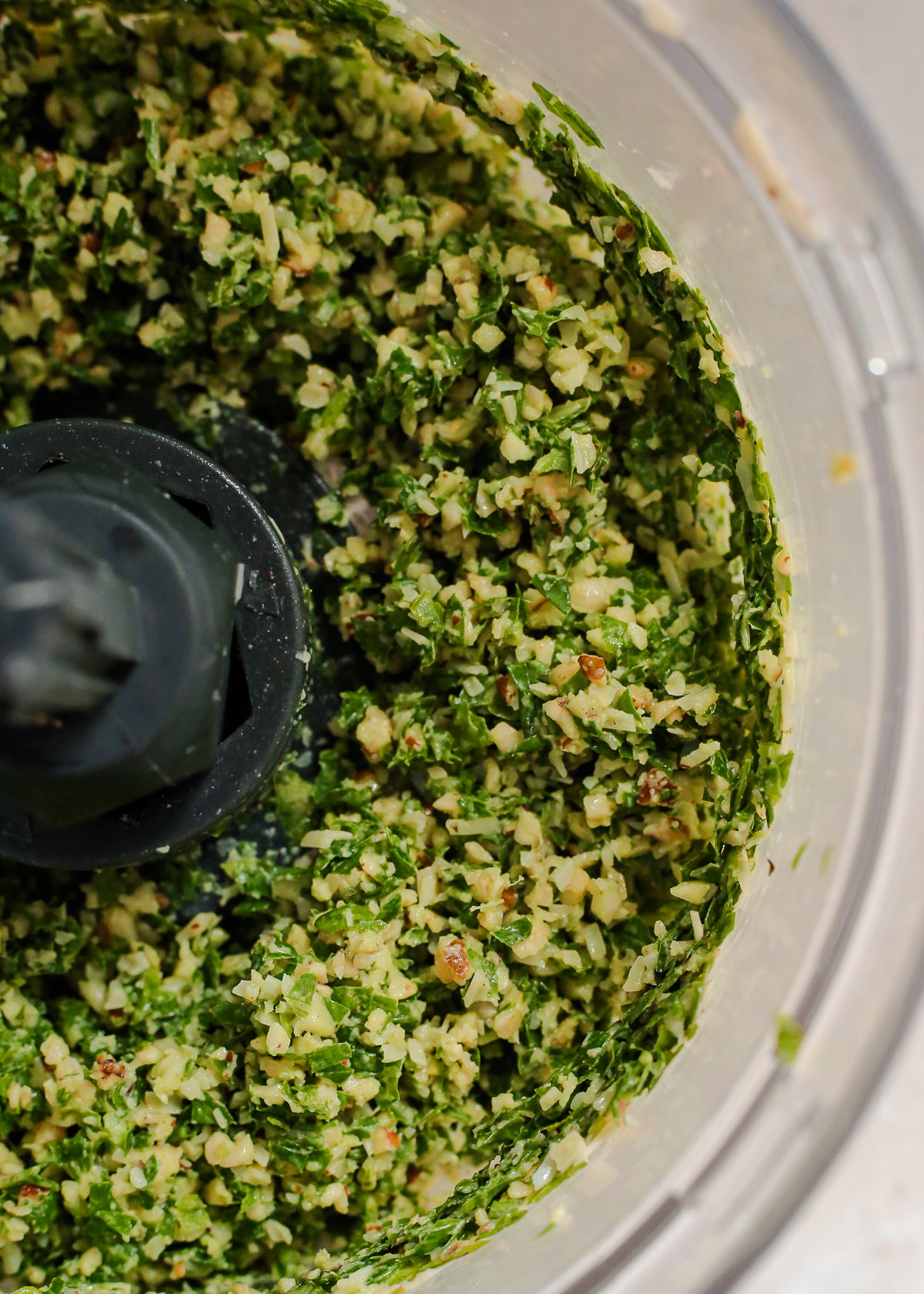
- Pulse a few times to chop to a rough texture (pictured below).
- Let the food processor run on low or medium speed as you drizzle in the olive oil. Pause and scrape down the sides as needed to make sure everything gets mixed in.
- Once blended to a thick, paste-like texture, taste and adjust the seasoning as needed.
That’s your moment to make it perfect for you. After that, all that’s left to do is enjoy!
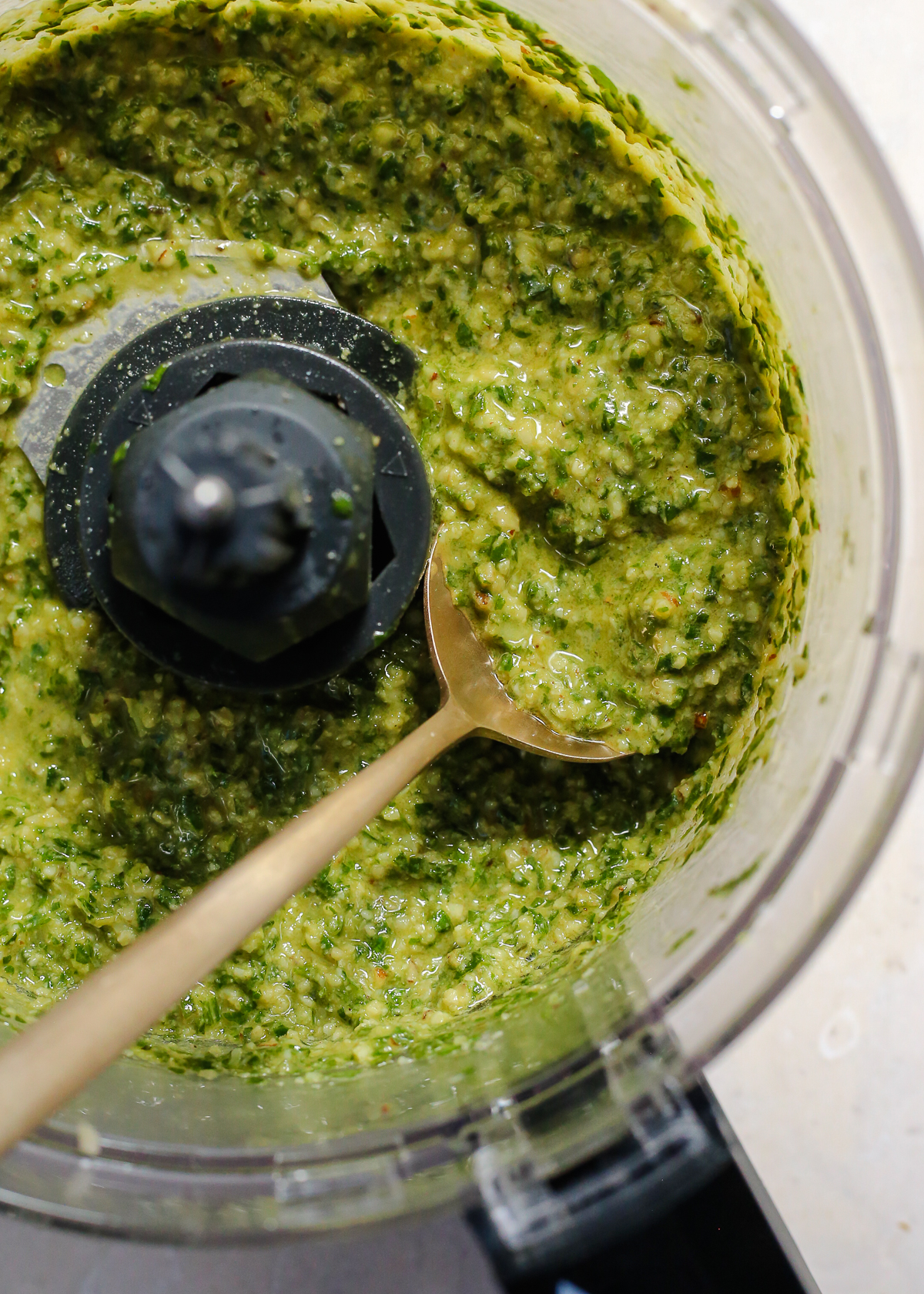
As written, this recipe makes about one cup of pesto sauce. You can easily scale it up or down depending on how much you need.
Street Smart Nutrition Tip: Don’t be surprised if your basil pesto loses its bright green color. This is normal and expected, and usually won’t impact the flavor. But if you want to avoid this, quickly blanch the basil before blending. A dunk in ice water will deactivate the enzymes that cause browning…but it’s an extra step with extra dishes and I prefer a more simple recipe. The choice is yours!
Swaps and Substitutions
One of my favorite things about pesto is how adaptable it is. The basic formula stays the same, but you can play around with the ingredients to suit your taste, budget, or what you have on hand.

If you’re looking for something beyond the classic basil pesto recipe, try these options:
- Swap the nuts: Pine nuts are traditional, but they can be expensive. I often use pecans or walnuts instead, and they work beautifully. Pecans add a slightly sweet flavor, while walnuts bring a more earthy, robust note. You could also try different nuts like almonds or cashews. You can even go nut-free with sunflower seeds or pumpkin seeds for an allergen-friendly version.
- Change up the greens: Don’t have much basil? You can easily substitute some of it with baby spinach, arugula, or kale. They’ll give you a slightly different flavor profile, but it’ll still be delicious. Try half basil and half spinach for a milder taste that’s still fresh and vibrant.
- Adjust the garlic: If you’re a garlic lover, add an extra clove or two. If you’re more sensitive to it, dial it back. Fresh garlic cloves are ideal since the pre-minced stuff can have a slightly pickled or oily taste, but in a pinch, use what you’ve got. You can also try roasted garlic if you really want to take the flavor to the next level.
- Add some heat: Want a little kick? Swap out the black pepper for crushed red pepper flakes. It adds a nice warmth without overwhelming the other flavors. You can also add sun-dried tomatoes for a more savory, umami-rich version.
Pesto Recipe Inspiration
Once you have a batch of homemade pesto, the possibilities are pretty much endless. These are just a few of my top recommendations:
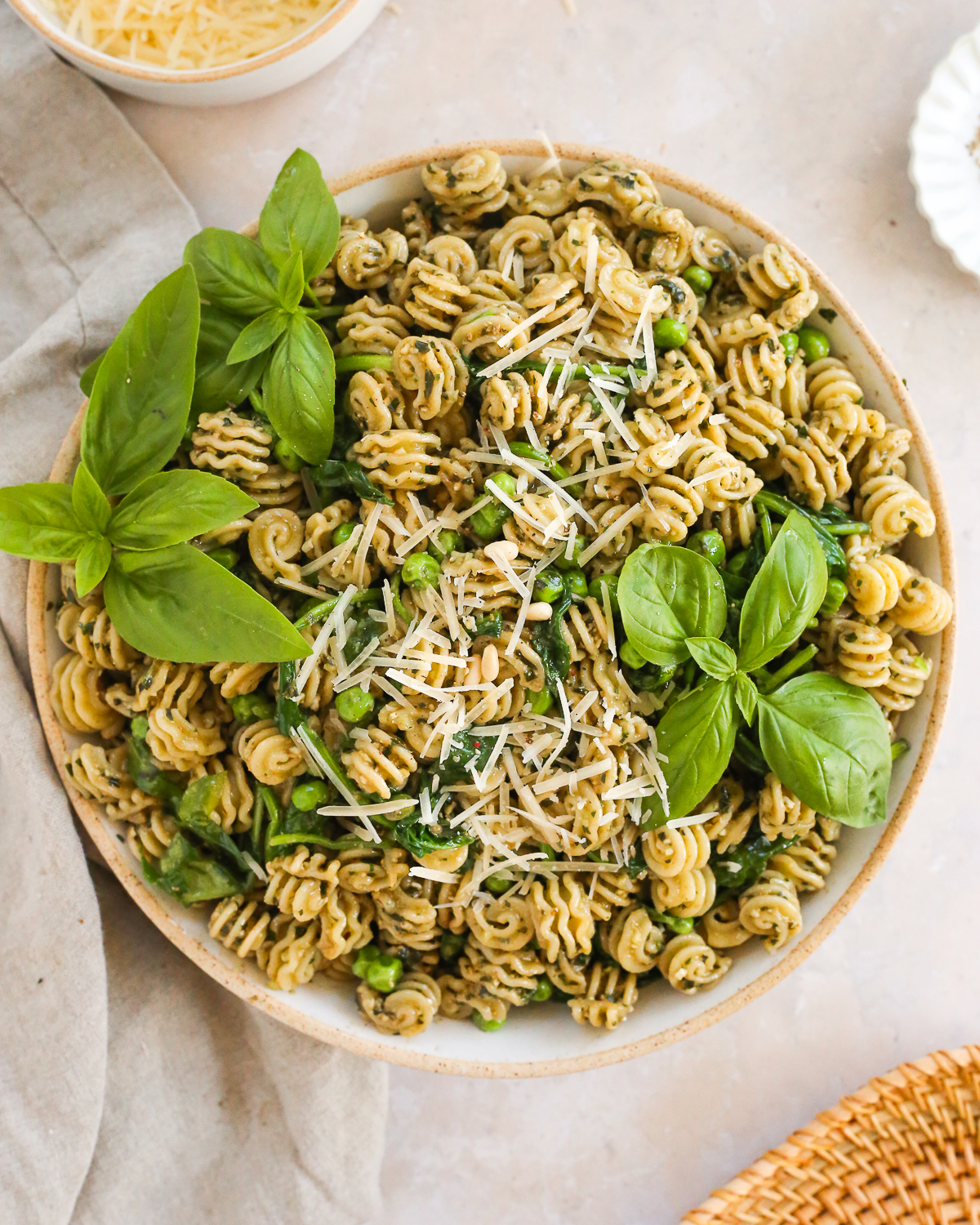
- Toss with pasta for a quick satisfying dinner, extra veggies recommended! Try this Basil Pesto Pasta recipe.
- Spread it on toast or a sandwich for an instant flavor upgrade, like my Caprese Avocado Toast with Pesto and Balsamic Glaze.
- Drizzle over scrambled eggs or an omelet for a savory, high-protein breakfast. Or, if you’re fueling up with whole grains, try my Savory Pesto Oatmeal Bowl (yes, really—it’s amazing!)
- Use homemade pesto as a dip for freshly baked bread or raw veggies.
I’ve also found pesto to be a delicious topper for homemade pizza or flatbreads. And last but not least, carry those summer flavors into soup season by swirling it into a hot bowl of your favorite cozy comfort food. My go-to recipes are Chickpea Noodle Soup or Leftover Turkey Noodle Soup.
Storage Tips for Homemade Pesto
If you’re planning to use your pesto within a few days, just transfer it to an airtight container and store it in the fridge. To help keep it from browning, you can add an extra drizzle of olive oil over the top before sealing it.
For longer storage, freezing is your best bet. Pesto freezes beautifully and can last up to six months in an airtight, sealed container. I like to freeze it in smaller portions (ice cube trays work great for this) so I can pull out just what I need without defrosting a whole batch. Pop a cube or two into pasta, soup, or whatever you’re making, and you’ll have that fresh basil flavor even in the dead of winter.
Easy Homemade Pesto Sauce
Ingredients
- 1 1/2 cups fresh basil leaves, packed
- 1/2 cup olive oil
- 1/2 cup shredded parmesan cheese
- 1/3 cup pine nuts
- 2-4 cloves garlic, peeled
- Coarse sea salt and pepper, to taste
Instructions
- Add all dry ingredients to the bowl of your food processor: fresh basil, pine nuts, Parmesan cheese, and garlic cloves. Season lightly with salt and pepper (optional).
- Pulse a few times to chop to a rough texture. Then, with the food processor running on low or medium speed, drizzle the olive oil into the spout.
- Pause and scrape down the sides as needed to make sure everything gets mixed in. Once blended to a thick, paste-like texture, taste and adjust the seasoning as needed. Add extra olive oil for a looser texture if preferred.
Notes
Nutrition
Now get our there and make some homemade pesto! Fresh basil season doesn’t last forever, so take advantage when you have the chance. Make a batch or two, freeze some for later, and enjoy that vibrant, fresh flavor whenever you want to.
Whether you stick with the traditional version or experiment with the swaps and variations I mentioned, I think you’ll be in for a treat.
As always, thanks for stopping by the Street Smart Nutrition blog. Leave a comment or review if you enjoyed this homemade pesto recipe, and cheers to more fearlessly nourishing meals!
Disclosure: This recipe was originally posted in September 2018. It has since been updated to improve the overall quality of the infomation and images.










Questions & Reviews
Such a great idea to use up greens to make pesto. I love switching up the nuts too! I love having pesto on hand for sandwiches!