This is your ultimate guide to farmed shrimp! From shrimp nutrition to sustainability and more, you’ll learn what to look for when shopping for farm-raised shrimp in the United States. Plenty of recipe inspiration included!

Disclosure: This post is sponsored by Best Food Facts and the United Soybean Board, as soy is a common ingredient in the feed rations used in aquaculture. Thanks for supporting the partners that support Street Smart Nutrition!
As a registered dietitian, I’m on a mission to help you make confident, informed food choices. And that often involves going back to the source to learn about where food comes from! I went to a couple of indoor aquaculture facilities to experience shrimp and fish farming firsthand. Keep reading to get the scoop on seafood!
What’s Included In This Post
First, let’s get introduced to the world of aquaculture more generally.
What is aquaculture?
Aquaculture is like farming, but instead of crops or livestock on land, it’s the practice of raising fish, shellfish, or other aquatic organisms in controlled environments. Think of it as “aquatic agriculture” that helps meet the demand for seafood without relying only on wild fisheries.
A key feature of aquaculture is that it can be done anywhere, even in regions far from the coasts. These land-based systems recycle, filter, and reuse water so farm-raised shrimp can thrive in carefully monitored conditions. When the tanks are optimized for what they need, with a specific diet, there are clear benefits:
- No risk of contaminating waterways or neighboring ecosystems
- Better biosecurity, which prevents or reduces the need for antibiotics
- Minimal environmental impact since the water is recirculated and land-based aquaculture can be done in relatively small spaces.
In the United States, this innovative approach lets farmers raise high-quality seafood to serve their local or regional markets. This is especially beneficial for landlocked regions and reduces the demand for fish, shrimp, or other seafood species to be shipped in from other places.
Why shrimp?
I can think of so many reasons to enjoy more shrimp, more often. And most of them have to do with great taste and nutrition!
Seafood is a broad category of fish, shellfish, mollusks, and crustaceans. You can discover a wide world of flavor depending on your choice of seafood species, cooking method, and cuisine style. In other words, there are endless possibilities for cooking delicious meals at home without getting bored. This seems to be the case for shrimp, since it’s the most popular seafood choice in America.
According to University of Washington scientists, the average person eats almost six pounds of shrimp every year.
The current Dietary Guidelines for Americans (DGAs) recommends eating at least two servings of seafood a week, or 8 ounces. This can have long-term benefits for heart health, brain health, and overall wellness. However, most Americans fall short of this recommendation. The good news is that a 3-ounce serving of cooked shrimp counts. Let’s take a closer look at shrimp nutrition next.
Shrimp Nutrition 101
Farm-raised shrimp is tasty and versatile, but it also boasts an impressive nutrient profile. Whether you’re making shrimp tacos, a simple shrimp stir fry, or adding it to your favorite pasta recipe, a 3-oz serving of cooked shrimp provides the following:
- 84 calories
- Less than 1 gram of fat
- 20 grams of protein
In other words, shrimp is a good protein since it has a naturally low fat content. But protein isn’t the only priority. You’ll also get these important nutrients each time you serve up some cooked shrimp:
- Selenium, a mineral that supports immune health through its antioxidant properties.
- Vitamin B12, which is key for forming red blood cells and keeping cells of the nervous system healthy. B12 is only found in animal-based foods, making shrimp a smart choice for flexitarian or plant-based diets that include seafood (also known as pescatarian diets).
- Iodine, a mineral needed for thyroid health. It’s usually added to salt (iodized salt) but is naturally found in shrimp.
- Astaxanthin, a type of carotenoid that gives pink shrimp its signature color. Most of it is found in the shells, so consider using shells to make seafood stock before discarding them.
Overall, farm-raised shrimp packs a lot of nutrition into a pretty small package. But one of the most common questions about shrimp is: “What about the cholesterol?”
It’s true—shrimp is higher in cholesterol than some other proteins, with about 160 milligrams per 3- ounce serving. But here’s the important context: dietary cholesterol doesn’t impact blood cholesterol as much as we once thought. Research now shows that saturated fat and overall dietary patterns are far more influential on heart health than cholesterol from foods like shrimp. That’s why the Dietary Guidelines removed the limit on dietary cholesterol, which was previously set at 300 mg per day.
The bottom line: shrimp is naturally low in saturated fat. It can be included in heart-healthy eating plans like the Mediterranean diet or DASH diet, or to replace other foods high in saturated fat. Most people can enjoy shrimp without concerns of it raising their risk for heart disease.
And here’s more good news: no need for concerns about farmed shrimp, either! Let’s dig into the facts.
Farmed vs. Wild Shrimp: What’s the Difference?
When you see shrimp at the seafood counter or in the frozen aisles, it’s usually labeled as either wild-caught or farmed. Both have a place in a sustainable food system, but there are some important differences to note.
Health and Safety Considerations
- Imported shrimp, whether farm-raised or wild-caught, may be treated with the use of antibiotics or raised under conditions that don’t meet strict U.S. standards. Practices vary between countries, though.
- U.S.-farmed shrimp is raised under strict FDA and USDA regulations, ensuring no antibiotics or unsafe additives, making domestic farmed shrimp a safe option for home cooks. When we visited the shrimp farm, we saw the testing equipment used to monitor water quality and shrimp health. They do daily checks and have alarms to alert them if anything in the tank system needs attention. It’s a constant effort to ensure the shrimp are safe and healthy, which in turn means they’re safe and healthy for us to eat.
While the large tanks aren’t an exact replica of a shrimp’s natural environment, they are the best choice for land-based aquaculture. Shrimp farmers have easier access to care for the shrimp and tighter control over water quality and filtering systems.
Cost and Accessibility for Home Cooks
- Wild shrimp can be seasonal, harder to find, and often more expensive due to limited supply and the costs of harvesting.
- Farmed shrimp is available year-round at a more consistent price point. U.S. farms reduce transportation costs and “food miles,” which means you can often find fresher shrimp at your local grocery store.
Access to farm-raised shrimp can support a regional or local economy in other ways, too. The farms we visited are located between Chicago and Indianapolis. These large cities are home to lots of people, with a growing appetite for sustainable seafood. Rather than sourcing from foreign shrimp farms, restaurants and grocery stores can buy from American shrimp farmers within a few miles from these big metro areas.
And speaking of sustainable seafood…
Sustainability and Environmental Impact
- Wild-caught shrimp can be a good choice when harvested under strict management systems. But some practices can have a negative impact on wild ecosystems in coastal areas or contribute to water pollution.
- Farmed shrimp avoids those issues by using systems that recycle water, prevent escapes into natural waters, and allow for precise monitoring of shrimp health without antibiotics or harmful chemicals. As the shrimp aquaculture industry grows, there’s less demand from (and potential damage to) fragile coastal ecosystems.
I really appreciated the opportunity to see shrimp farming firsthand and bring my experience back to this blog. It was clear that U.S.-farmed shrimp is raised under tight regulations for the environment and food safety. Now, when I see, “Product of the USA” on a package or label, I have confidence that I’m choosing shrimp that meets my standards, too. You can also look for certifications like ASC (Aquaculture Stewardship Council) or BAP (Best Aquaculture Practices) to make an informed decision.
There’s so much more that goes into sustainability, so take a look at this interview from Best Food Facts to learn more: Is Aquaculture a Sustainable Way to Produce Fish and Seafood?
Now let’s shift our focus to the kitchen! Up next is my guide to buying and cooking with shrimp.
Shrimp Size Guide: How to Buy the Right Shrimp
Shrimp size is determined by the number of shrimp per pound, often written as a range, like 21/25.
Here’s a quick cheat sheet:
- Jumbo (13/15, 16/20, 21/25) – Great for grilling, skewers, or dishes where shrimp is the star.
- Large (26/30, 31/40) – A versatile choice for pasta, curries, or sautéed shrimp.
- Medium (41/50) – Ideal for tacos, stir-fries, or rice bowls where shrimp is mixed with other chopped ingredients.
- Small (51/60) – Perfect for soups, salads, or fried rice.
Street Smart Nutrition Tip: A few other size categories exist, like “extra small” or “colossal”. The easiest way to remember the differences is that as the number gets smaller, the shrimp get bigger.
No matter what size you buy, fresh shrimp should be eaten within 1-2 days. If you don’t plan to cook it before then, shop for frozen shrimp instead. This preserves the best quality and freshness since the shrimp is flash-frozen within hours of being harvested.
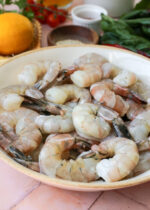
How to Peel and Devein Shrimp
You can usually find pre-peeled and deveined shrimp in most grocery stores. But if you need to finish this prep step at home, follow these steps:
How to Peel and Devein Shrimp
Ingredients
- 1 lb large shrimp, fresh, or thawed from frozen
Instructions
- Hold a single unpeeled shrimp by the tail. Use your other hand to remove the legs.
- Unwrap the thin shrimp shell down to the tail. It's up to you if you want to remove the tail or leave it attached.
- To devein shrimp, use a small, sharp knife to slice along the back of the shrimp. Be sure to make only a shallow cut, deep enough to expose the vein.
- Use the tip of the knife to carefully lift the vein, separating it from the flesh so you can fully remove it.
Notes
Cooking Tips for Perfect Shrimp Every Time
Shrimp cooks in minutes. This is both its biggest advantage and its biggest challenge. Overcooked shrimp can be chewy or rubbery. But that can be easily avoided when you know what to watch for.
How to Avoid Overcooking Shrimp
- Watch the shape: Shrimp should curl into a “C” when cooked. If they form a tight “O,” they’ve gone too far.
- Look for color change: Raw shrimp are gray and translucent; cooked shrimp turn pink and opaque.
- Use high heat: Shrimp do best with quick, high-heat cooking methods like grilling, searing, or broiling.Other cooking options include poaching or boiling, breading and frying, or steaming. When the internal temperature reaches 145°F or 62.8°C, you know it’s done.
Good quality shrimp should taste slightly sweet. Some shrimp recipes are minimally dressed to highlight the natural flavor. But if you’re looking for more variety, try the suggested flavor pairings in the next section.
Quick Marinades and Flavor Ideas
Shrimp’s mild flavor pairs well with almost any cuisine. Keep marinades simple and quick (15–30 minutes is plenty).
Here are a few of my favorite flavor combinations:
- Garlic, olive oil, and lemon for classic and bright flavors, ideal for Italian- or Mediterranean-style cooking.
- Chili powder, lime juice, and cumin for tacos, fajitas, or Latin-inspired dishes.
- Soy sauce, ginger, and sesame oil for stir fries, fried rice, grilled shrimp skewers, or as a filling for dumplings or potstickers.
- Honey, garlic, and sriracha for a sweet-and-spicy glaze on seared or grilled shrimp.
Shrimp Recipe Inspiration for Home Cooks
When it comes to recipes, start with these reader favorites!
- Baked Lemon Garlic Shrimp with Pasta
- Crunchy Cabbage Salad with Miso-Peanut Shrimp
- Shrimp and White Beans with Garlicky Greens and Tomatoes
Shrimp is a nutritious, versatile protein that fits into countless recipes and eating patterns. But not all shrimp is created equal. Understanding the differences between farmed and wild-caught shrimp, knowing how to decode labels, and learning a few simple cooking tricks can make all the difference in your kitchen.
By choosing U.S.-farmed shrimp, you’re getting:
- A fresh, safe product raised under strict standards for animal welfare.
- The peace of mind that shrimp are raised using sustainable practices.
- A way to support American farmers and reduce the environmental footprint of your food.
So the next time you’re at the seafood counter, you’ll have the knowledge you need to pick the best shrimp for your table. From tacos and stir-fries to grilled skewers and comfort food classics, shrimp can be a go-to protein that’s as good for your family as it is for the planet.
As always, thanks for stopping by the Street Smart Nutrition blog. Cheers to more fearlessly nourishing meals!