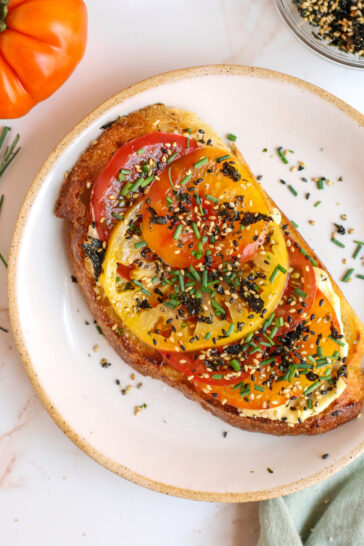
Once you try this creamy Dijon Aioli recipe, you’ll want to put it on everything! It’s rich, tangy, and instantly adds a burst of flavor to roasted vegetables, sandwiches, main dishes, and more. With just four basic ingredients, you can quickly craft a seriously delicious sauce to spruce up your homemade recipes.
What’s Included In This Post
One of the easiest ways to make vegetables more enticing is to make them taste better. It’s truly that simple!
I’ve been a registered dietitian for over a decade, and this is one of my all-time favorite myths to bust. Many people think adding a creamy sauce or dressing somehow negates the nutrition in whatever you’re adding it to. Not so! In fact, you might find dual benefit because not only will you be encouraged to eat more veggies, more often but the fat can help your body absorb and use fat-soluble vitamins (vitamins A, D, E, and K).
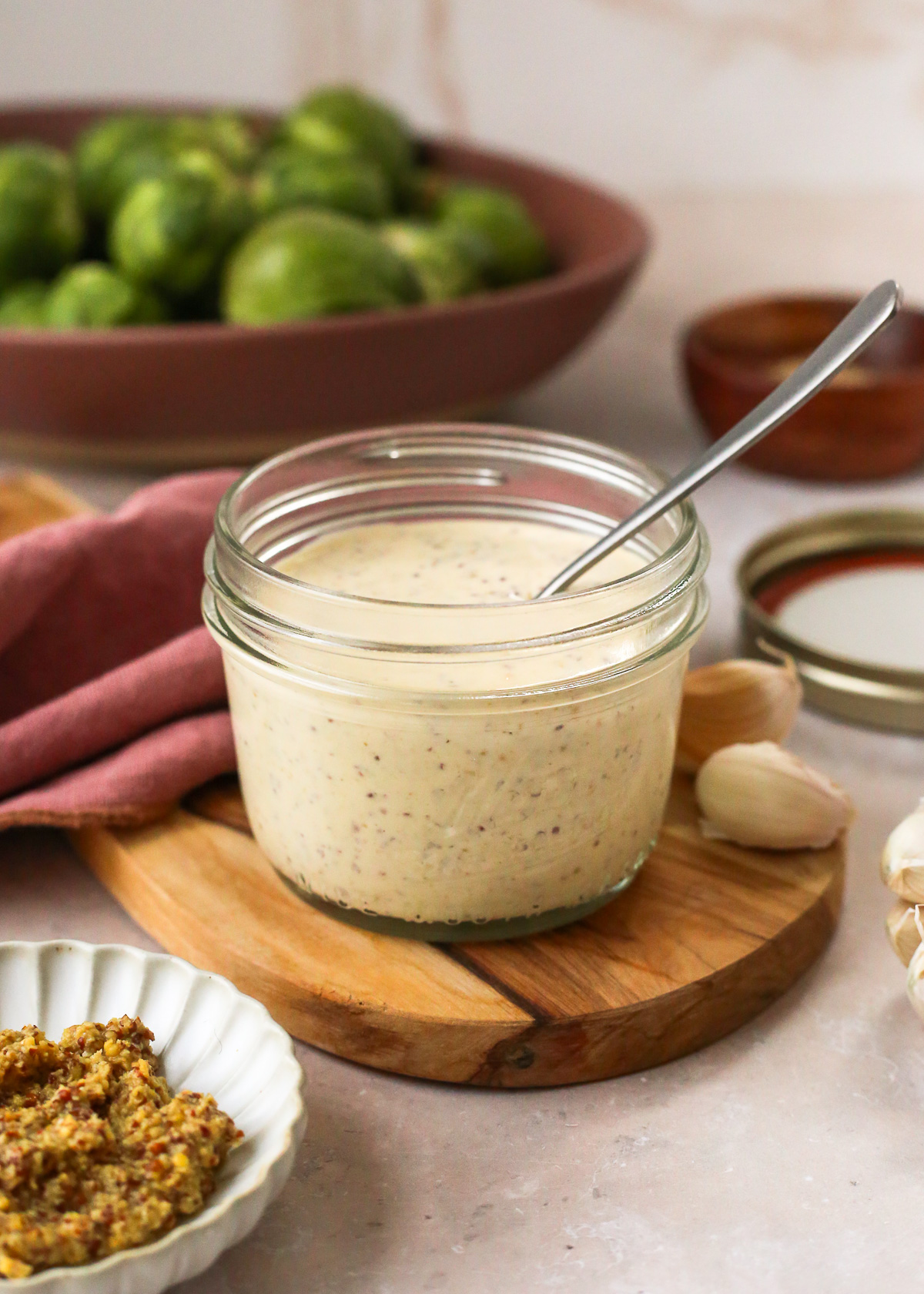
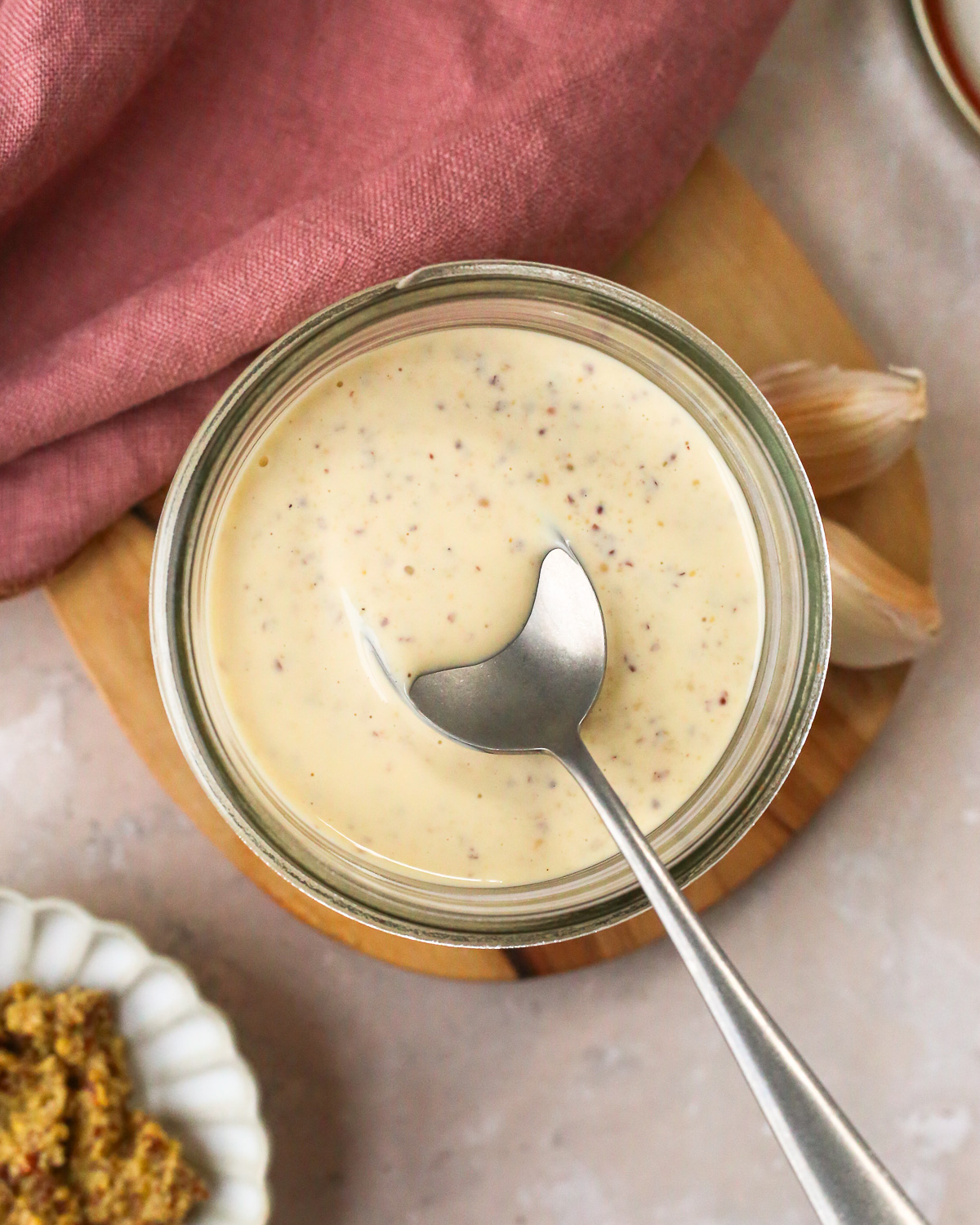
That’s where this homemade dijonnaise sauce comes in! I first tested it years ago with a batch of roasted Brussels sprouts. And well, it’s been in my steady rotation ever since. There are so many ways to use it up (more on that below), each one potentially more delicious than the next!
A traditional aioli is an emulsion of olive oil and garlic. However, these days, “aioli” is pretty much synonymous with mayonnaise, which uses egg yolks, a neutral-flavored oil (such as vegetable oil, canola oil, or avocado oil), fresh lemon juice, and salt.
This 4-ingredient dijon aioli recipe uses simple ingredients and pantry staples you can easily find at most grocery stores. Let’s get started!
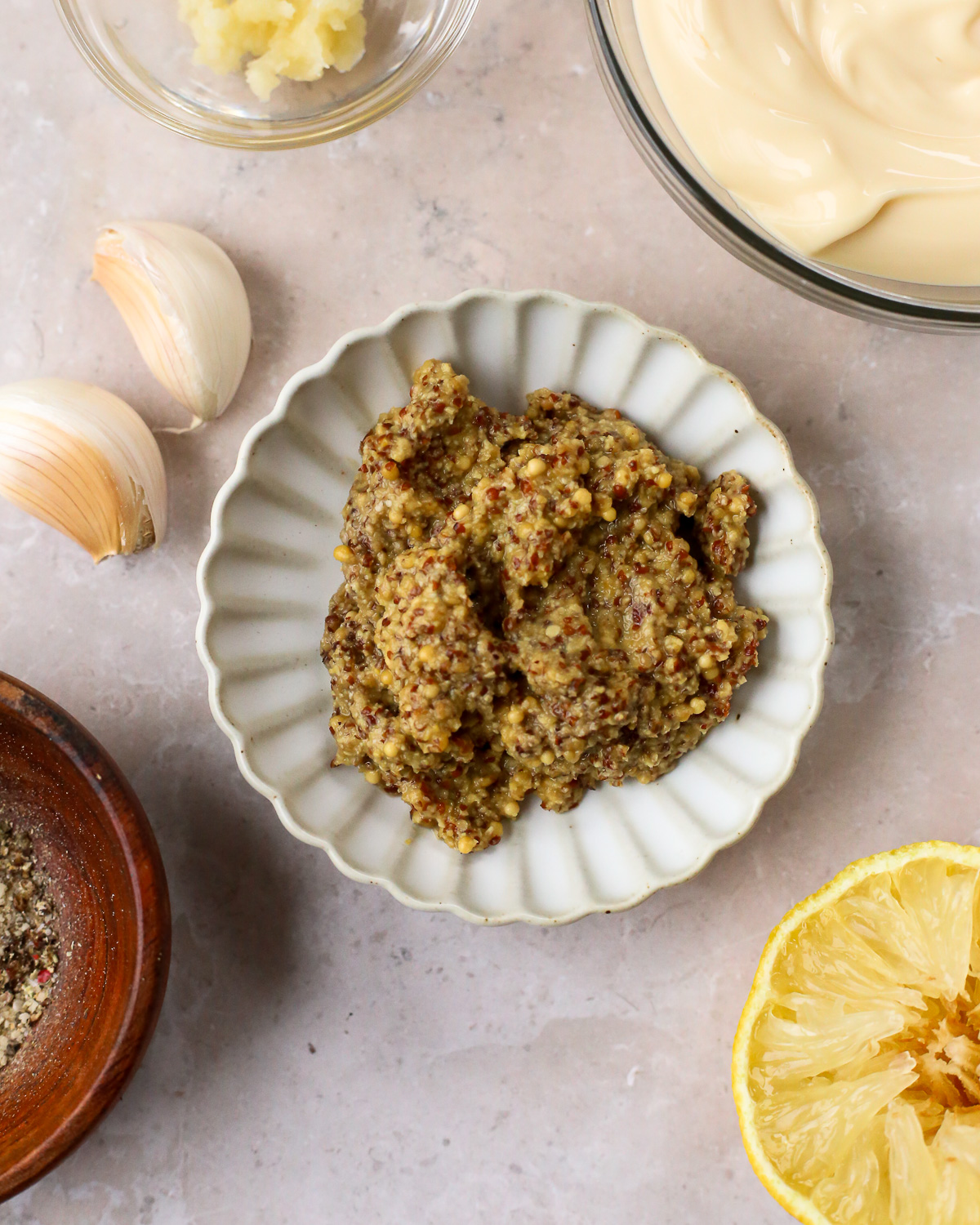
Dijon Aioli Ingredients
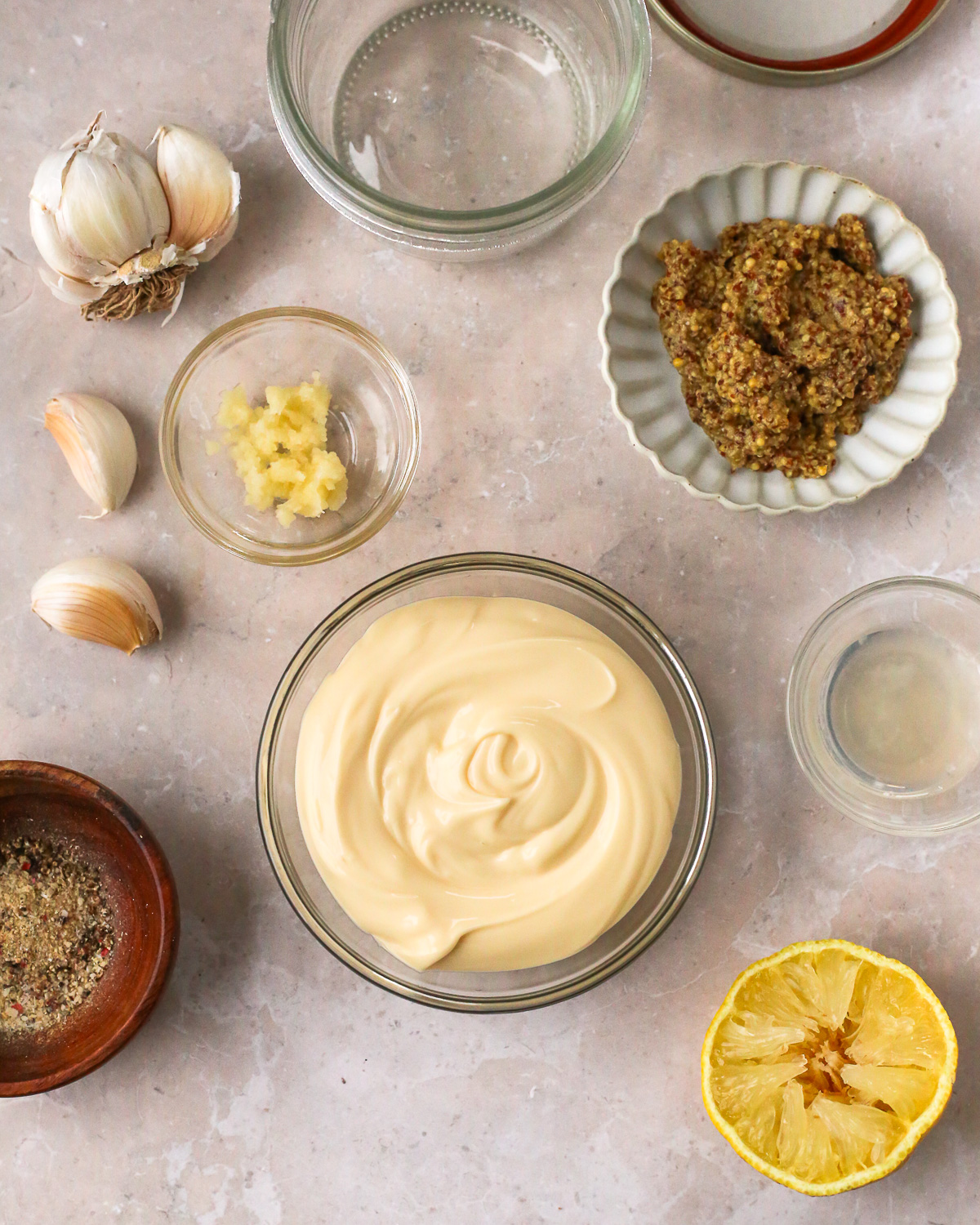
- Kewpie mayo
- Dijon mustard. I recommend the stone ground or whole grain mustard for the added texture from the mustard seeds. But creamy dijon mustard works just as well with the same intense flavor.
- Granted or minced garlic
- Lemon juice to thin out the texture without diluting the tangy flavor.
Street Smart Nutrition Tip: For me, kewpie mayo is the key to this dijon aioli recipe. This Japanese-style mayonnaise is made with egg yolks, just like a traditional mayo. But the secret weapon for rich, savory flavor is MSG (monosodium glutamate). As you’re shopping, look for this on the ingredient list to know you’re getting the rea
Swaps and Substitutions
If you don’t have kewpie mayo, you can use another traditional or regular mayo. I recommend this option over something like Miracle Whip, which won’t have the same thickness or flavor.
Likewise, using fresh garlic will provide the best flavor. But you can easily swap for garlic powder. Garlic powder is more concentrated than fresh, but doesn’t have the same sharp or pungent taste. Start with about 1/4 to 1/2 teaspoon and adjust the flavor as needed.
As written, this dijon aioli recipe is vegetarian and free from dairy, gluten, and nuts. For a vegan version, replace the kewpie mayo with you favorite brand of vegan or plant-based mayonnaise.
How to Make Homemade Dijonnaise
Many homemade aioli recipes call for an immersion blender to make the creamy emulsion happen. Thankfully, no kitchen appliances are needed for this Dijon aioli.
However, a microplane is very helpful to grate the garlic cloves. Otherwise, finely mince the garlic or use a garlic press.
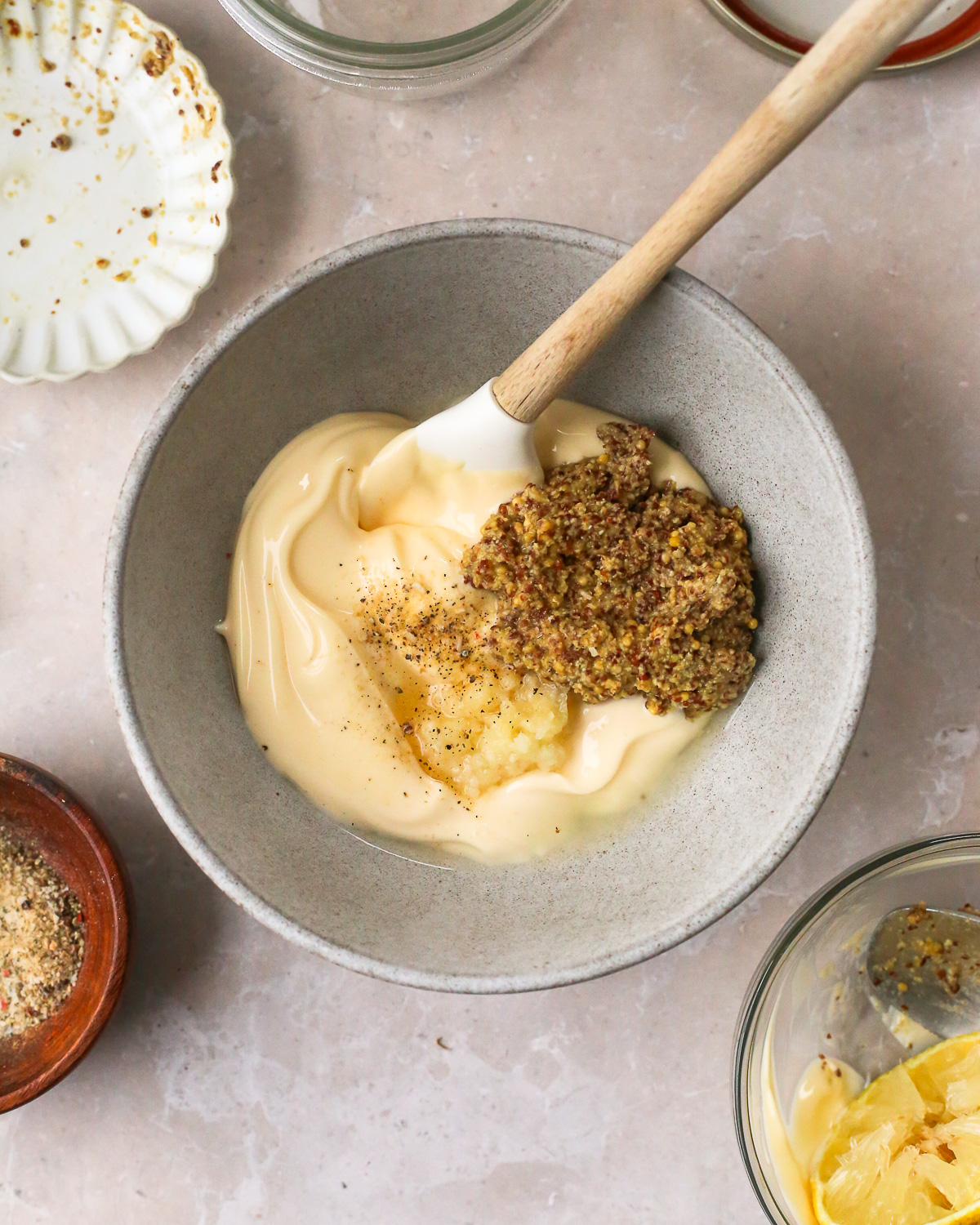
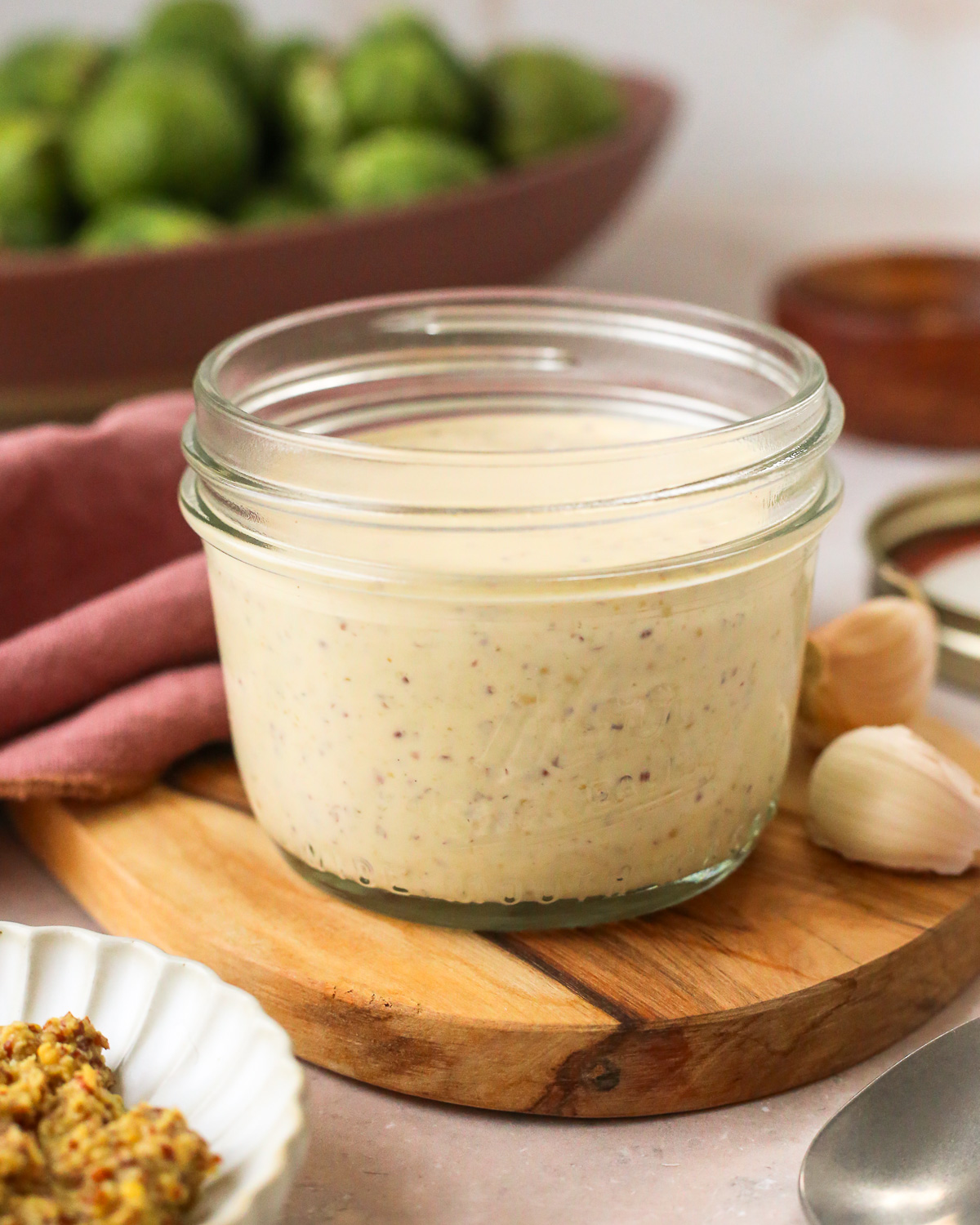
Then, simply add all the ingredients to a small bowl or wide-mouth jar. Whisk or fold everything together until well combined, and that’s it!

What to Serve with Dijon Aioli
As a dietitian, I’m openly biased, but I think just about any roasted vegetable is calling for this creamy mustard sauce! I still love to serve it with roasted Brussels sprouts, whether from the oven or air fryer. It also pairs beautifully with roasted carrots, broccoli, green beans, and even cabbage (roasted, braised, sauteed, or shredded as you would for a coleslaw.
Potatoes deserve their own category. They’re versatile, affordable, and always delicious! Try pairing this dijon aioli with crispy roasted potatoes or French fries. It even works well with sweet potato fries.
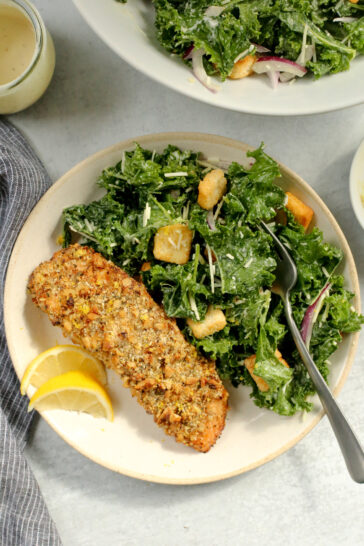
But don’t just think of it as a dipping sauce. You can drizzle it over grilled chicken, pork, or salmon. It even pairs well with beef, which is why I loved to spread it over toasted bread for a fancied-up roast beef sandwich.
Storage Tips
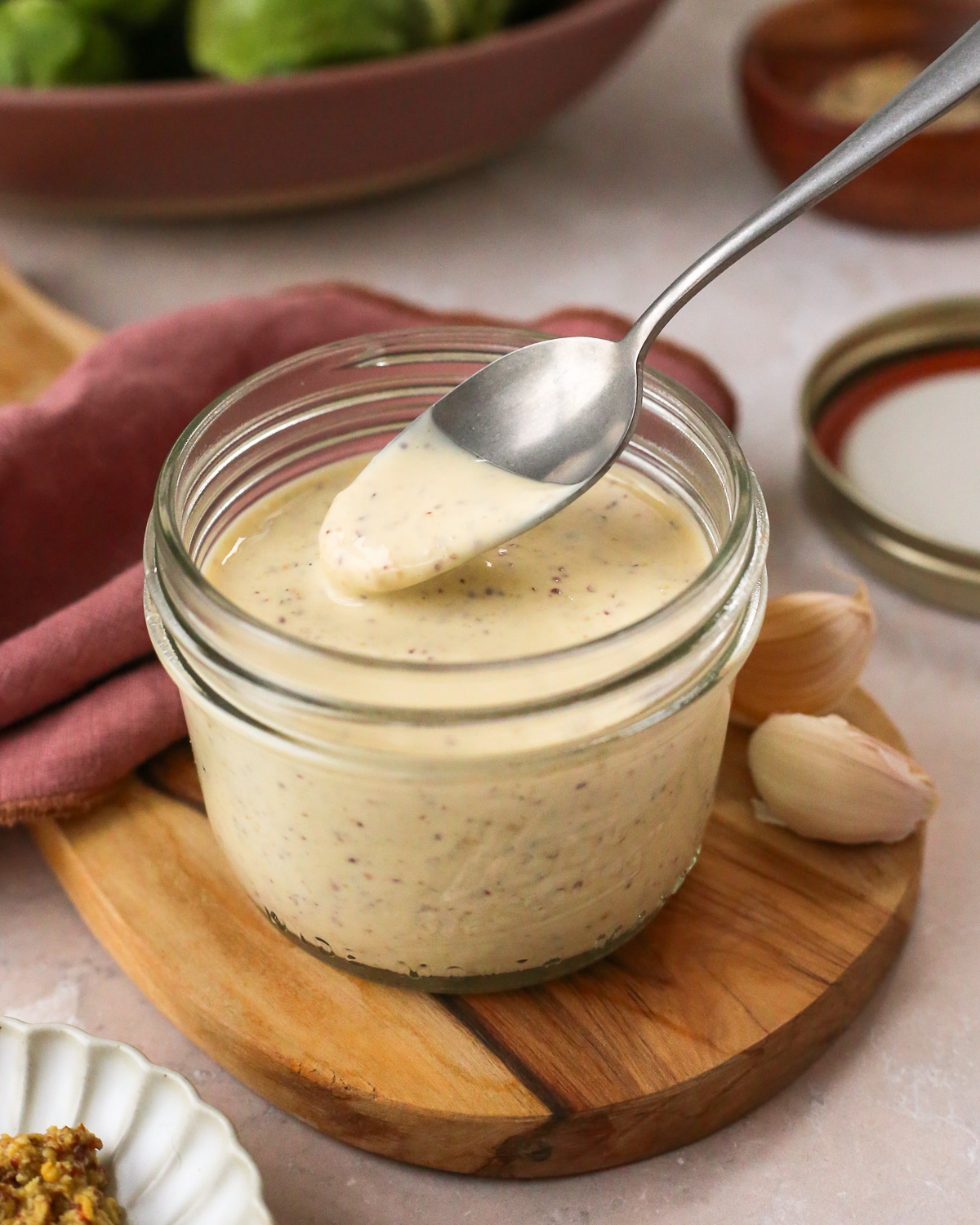
Store extra dijonnaise sauce in an airtight container. Keep it in the fridge for up to a week. Although, good luck getting it to last that long!
If you’re prepping ahead, you can make it up to three days in advance. Just give it a good stir before serving to mix the ingredients again and loosen the texture.
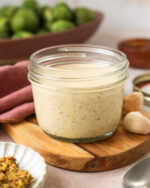
Dijon Aioli (Homemade Dijonnaise)
Ingredients
- 1/2 cup kewpie mayo, or real mayonnaise
- 2 tbsp dijon mustard, stone ground or whole
- 1-2 cloves garlic, grated or finely minced
- 1-2 tsp lemon juice
Instructions
- Add the kewpie mayo, dijon mustard, and lemon juice to a bowl.
- Use a microplane to grate the garlic cloves, or finely mince into a chunky paste-like texture. Add to the bowl along with the rest of the ingredients.
- Whisk together until well combined. Adjust flavor as needed with a pinch of salt or sugar, or additional lemon juice for a more tangy flavor.
- Serve with your favorite recipes, or seal in a jar or container and store in the refrigerator.
Notes
Nutrition
I can’t wait to hear how you put this dijonnaise sauce to work! Leave a comment or rating below to let me know what you think.
As always, thanks for stopping by the Street Smart Nutrition blog. Cheers to more fearlessly nourishing meals!