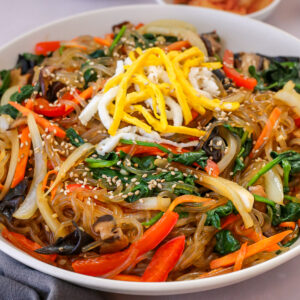
Vegetarian Japchae (Korean Glass Noodles)
This is a plant-based version of the popular Korean side dish, japchae. Chewy sweet potato starch noodles and colorful stir-fried vegetables are tossed in a sweet and savory sauce, perfect for pairing with your main meal.
Servings 6 servings
Calories 267kcal
Ingredients
- 8 oz sweet potato starch noodles (dangmyeon) or about 220 grams
- 1 medium carrot peeled and cut into thin matchsticks
- 1/2 yellow or sweet onion thinly sliced
- 1 red bell pepper stem and seeds removed and thinly sliced
- 1 package shiitake mushrooms or 4-5 oz
- 1/2 cup dried wood ear mushrooms or 10-15 grams, if available
- 2 large eggs whites and yolks separated
- 1 bag fresh spinach or 5 oz
- 1 tsp toasted sesame oil
- 2-3 cloves garlic finely minced, or about 2 tsp
- 1 tsp sesame seeds white or roasted
- Cracked white pepper to taste (sub black pepper or gochugaru if preferred)
For the Sauce
- 1/4 cup low sodium soy sauce
- 2 tbsp white sugar
- 2 tbsp toasted sesame oil
- 1/4 tsp white pepper
Instructions
Prep Steps
- Soak the wood ear mushrooms (if using) in a bowl with warm water for at least 30 minutes, or once they have tripled in size to become soft and flexible. Rinse under cool water to remove any dirt or sand from the stems.
- Remove the stems from the shiitake mushrooms and cut into thin slices. Thinly slice the bell pepper, carrot, and onion as well. Keep them separated and set aside until ready to begin cooking.
- Prepare the sauce by mixing all ingredients together in a small bowl or measuring cup. Add 1 1/2 tablespoons of the sauce mixture to the sliced shiitake mushrooms. Stir to combine, then set aside to marinate while you continue cooking.
Cooking Instructions: Spinach
- Bring a large pot of water to a boil. Prepare an ice bath fo the blanched spinach by filling a bowl with cool water plus ice cubes.
- Once the water is boiling, drop in the spinach and blanch for 15-30 seconds, or until bright green and tender. Scoop and drain the spinach, placing in the ice bath to stop the cooking process.
- Strain the cooked spinach from the ice water and squeeze firmly to remove excess water. Place in a small bowl and add the minced garlic and toasted sesame oil. Stir to combine, then set the seasoned spinach aside until ready to assemble and mix the japchae.
Cooking Instructions: Noodles
- Drain and refresh the water and bring it back to a boil in the same large pot. Once the water is boiling, add the sweet potato starch noodles (dangmyeon).
- Cook according to package directions or until translucent and chewy (about 8 minutes). Once cooked, drain in a large colander and place in the large mixing bowl.
- To prevent noodles from becoming too sticky, drizzle lightly with toasted sesame oil. Do not add water from the cooking pot, as the noodles will continue to absorb liquid and may become soggy.
Cooking Instructions: Eggs
- Meanwhile, heat a nonstick skillet over low heat. Separate the egg whites and yolks into separate bowls, whisking lightly.
- Lightly oil the pan if needed and pour the egg white mixture into the heated pan. Tilt to spread into a thin layer and cook each side only until cooked through (do not brown). Remove from the skillet, then repeat with the egg yolk mixture.
- Allow to cool, then roll loosely and cut into thin slices to top the finished japchae.
Cooking Instructions: Vegetables
- Return the skillet to the burner and increase heat to medium or medium high. Working in batches, stir fry the vegetables separately for 3-4 minutes each. The recommended cooking order is: carrots, red bell peppers, onions, marinated mushrooms.
- As each batch finishes cooking, remove from the hot skillet and add to the bowl of cooked noodles (dangmyeon). Adjust cooking time as needed for the marinated mushrooms to sweat out moisture and start to sear on each side, otherwise they may be slimy.
- If using wood ear mushrooms, roughly chop them into bite-sized pieces and cook alongside the marinated shiitake mushrooms. Add during the last few minutes to avoid overcooking them, as they can lose their texture if overcooked.
Assembly Instructions
- Once all vegetables (carrots, red bell pepper, onions, mushrooms, and spinach) are added to the mixing bowl with the cooked noodles, add the remaining sauce.
- Using clean or gloved hands, or tongs, toss everything together. Adjust flavor as needed with soy sauce, sugar, or sesame oil.
- Garnish with sesame seeds and the sliced egg, serve warm or at room temperature alongside your main meal.
Notes
Use kitchen shears to roughly chop the cooked noodles into shorter, more manageable pieces.
Number of servings will vary depending on serving style. As written, recipe yields four large servings that may serve as a meal with an added protein. Or, six or more smaller servings as a side dish or traditional Korean-style banchan.
Nutrition
Serving: 1serving | Calories: 267kcal | Carbohydrates: 47g | Protein: 6g | Fat: 7g | Saturated Fat: 1g | Polyunsaturated Fat: 3g | Monounsaturated Fat: 3g | Trans Fat: 0.01g | Cholesterol: 55mg | Sodium: 453mg | Potassium: 566mg | Fiber: 4g | Sugar: 7g | Vitamin A: 6837IU | Vitamin C: 40mg | Calcium: 79mg | Iron: 2mg